
In a move that bridges next-generation energy storage with advanced robotics, battery giant CATL and AI robotics firm Galbot have inked a global strategic partnership. The agreement goes beyond a typical supply deal: it targets the modernization of intelligent production lines, the worldwide scaling of AI humanoid robots, and the creation of what the companies call the industry's first aftermarket service standard specifically for humanoid robots.
50‑kg Workhorse Tackles Demanding Shop‑Floor Jobs
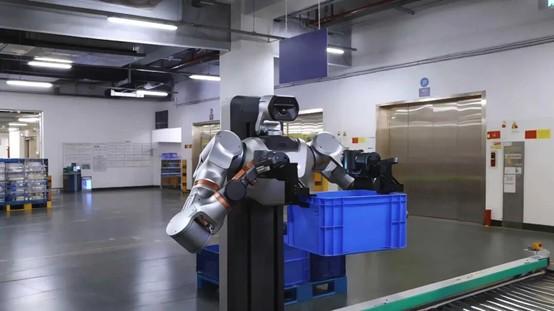
The centerpiece of the collaboration is the Galbot S1, a heavy-duty humanoid robot that claims the title of the world's first AI-driven humanoid in regular operation to be powered directly by CATL battery cells. The robot is built for the gritty realities of manufacturing—hazardous environments, repetitive motions, and physically strenuous tasks that typically strain human workers.
Spec-wise, the S1 features dual‑arm lifting capacity of 50 kilograms, vision‑only centimetre‑level positioning accuracy, and 360° omnidirectional obstacle detection. On the power side, CATL has equipped the battery with particle‑graded cathodes, low‑lithium‑consumption anodes, and a self‑healing electrolyte that mimics biological systems. Together, these engineering choices push the cell failure rate down to parts‑per‑billion (PPB) levels. The result is a continuous runtime of up to eight hours, with longevity and safety margins that suit around‑the‑clock production schedules.
At CATL's own factory, the Galbot S1 has already been integrated into module and battery pack assembly lines. It performs extended autonomous material handling and picking tasks, taking over high‑intensity workflows that previously required manual labour. Early observations indicate a notable reduction in the physical burden on floor staff, as the robot handles the heaviest and most repetitive portions of the job.
After‑Sales Network Expands to Cover Humanoids
Beyond the hardware deployment, the partnership leverages CATL's established NING Service Network—a comprehensive system for battery inspection, maintenance, and recycling. That infrastructure will now formally extend its reach to AI humanoid robots, making CATL one of the first energy companies to offer lifecycle service support for robotics. Alongside this expansion, the two firms plan to jointly develop the world's first aftermarket service standard tailored specifically for AI humanoid robots, covering diagnostics, repair protocols, and end‑of‑life handling.
Industry observers note that this dual‑pronged approach—deploying a rugged robot while simultaneously building a service ecosystem—could accelerate adoption across sectors where heavy lifting and battery safety are paramount. With the S1 already live on CATL's own lines, the partnership offers a real‑world proving ground for what may become a blueprint for humanoid robotics in industrial settings.
