
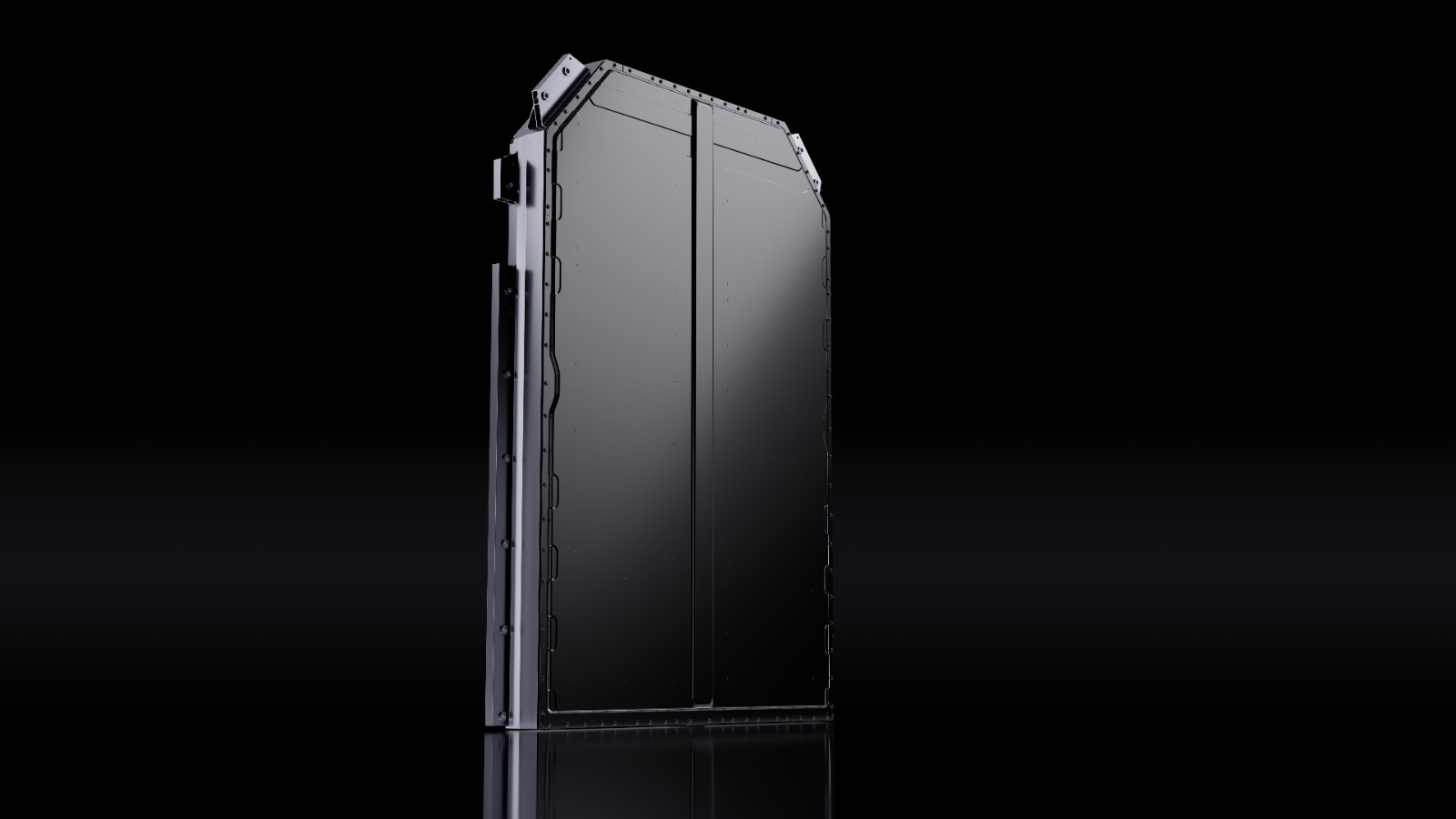
Global battery manufacturing giant CATL recently hosted its highly anticipated Super Technology Day in Beijing, taking the wraps off six groundbreaking innovations. The impressive lineup features the third-generation Shenxing Superfast Charging Battery, the third-generation Qilin Battery, the Qilin Condensed Battery, the second-generation Freevoy Super Hybrid Battery, the Naxtra Sodium-ion Battery, and a comprehensive supercharging and battery-swapping network. Together, these advancements aim to cater to a wide array of mobility demands across varied consumer scenarios.
Speaking at the showcase, CATL’s Chief Scientist, Dr. Wu Kai, provided a detailed analysis of the strengths, limitations, and evolutionary pathways of different battery chemistries. He explained that lithium iron phosphate (LFP) is approaching its theoretical energy density peak, making it ideal for a technology roadmap focused on extreme fast-charging capabilities. Meanwhile, nickel manganese cobalt (NCM) remains crucial for global competitiveness due to its high energy density, a metric that continues to dictate industry leadership. Furthermore, he highlighted sodium-ion technology's massive potential in extreme temperature environments and large-scale energy storage. Ultimately, Dr. Wu stressed the need for the lithium-ion sector to pursue multiple chemical pathways concurrently to meet both consumer demands and broader energy security goals.
CATL Chairman and CEO Robin Zeng also addressed the audience, emphasizing that true industrial progress requires rigorous scientific validation. He noted that for Chinese technology to successfully expand globally, it must rely on the quality of innovation, robust validation processes, and brand credibility, rather than merely depending on scale and speed.
From an electrochemical perspective, increasing charge rates while preserving battery health has traditionally been hindered by temperature rise rather than trickle current. As dictated by the Arrhenius equation, a 10°C increase in battery temperature can double the rate of internal side reactions, severely degrading cycle life.
The third-generation Shenxing Superfast Charging Battery tackles this by minimizing operational heat, enhancing thermal propagation, and utilizing high-precision controls. The result is a battery that retains over 90% of its capacity even after 1,000 complete cycles, striking an optimal balance between rapid charging and long-term durability.
Performance metrics are staggering: the battery boasts an equivalent 10C and a peak 15C charging rate. It can charge from 10% to 35% in a mere one minute, 10% to 80% in 3 minutes and 44 seconds, and 10% to 98% in 6 minutes and 27 seconds. Even in freezing −30°C conditions, aided by self-heating tech and an integrated charging-swapping ecosystem, the battery can charge from 20% to 98% in roughly nine minutes.
Historically, achieving extended ranges in premium EVs equipped with LFP batteries meant adding heavy capacity, which compromised vehicle efficiency. The third-generation Qilin Battery shifts this paradigm with a cell energy density of 280 Wh/kg, enabling a 1,000 km range and supporting 10C fast charging.
Delivering an immense 3 MW of peak power—double that of the previous track-focused Qilin battery—the new 625 kg battery pack is 255 kg lighter and saves 112 liters of space compared to standard LFP equivalents. These weight reductions translate to:
A 6% drop in energy consumption per 100 km, leading to massive fleet-wide CO₂ and electricity savings.
Enhanced vehicle dynamics, including a 0.6-second faster 0–100 km/h acceleration, 1.44 meters shorter braking distances, and significantly improved obstacle avoidance.
A 40% increase in chassis component lifespan and a 30% increase in tire life.
Safety is further reinforced through a "thermal-electrical separation" design, giving each cell an independent exhaust channel to prevent thermal runaway propagation.
The Qilin Condensed Battery marks a milestone by integrating aviation-grade technology into passenger vehicles, setting new mass-production records. It achieves a remarkable 350 Wh/kg cell energy density and 760 Wh/L volumetric density, translating to a 1,500 km range for sedans and over 1,000 km for large SUVs, all while keeping pack weight under 650 kg.
Utilizing a high-nickel cathode, low-expansion silicon-carbon anode, and a revolutionary lightweight titanium alloy case, the technology builds upon CATL’s successful electric aviation validations on 4-tonne aircraft. By substituting liquid electrolytes with a condensed system, CATL ensures a strict "no liquid to leak, no liquid to ignite" safety standard, further bolstered by a self-fusing composite current collector.
The second-generation Freevoy Super Hybrid Battery brings plug-in hybrids into the 600 km pure-electric territory while standardizing 10C superfast charging. Freevoy utilizes a novel gradient-uniform mixing of LFP and NCM materials at the particle level, achieving a 230 Wh/kg energy density that boosts range by 15% without adding weight.
The LFP variant provides up to 500 km of electric range, perfect for weekly commuting. The NCM version pushes pure electric range past 600 km, giving the vehicle a total combined range exceeding 2,000 km. It maintains robust power output (1.2 MW) even at a low 20% state of charge and features extreme ruggedness, capable of withstanding 1,500 joules of impact and surviving underwater for over 200 hours without performance loss.
Finally, the Naxtra Sodium-ion Battery signals CATL’s successful transition of sodium technology from the laboratory to large-scale commercial manufacturing. Having systematically resolved four major engineering bottlenecks—extreme water control, hard carbon gas generation, aluminum foil adhesion, and self-forming anodes—the company has paved the way for reliable deployment. The Naxtra battery is scheduled to enter full-scale mass production by the end of 2026.
Next:Sungrow Redefines C&I ESS Reliability at GRES with Extreme Tests
Previous:REPT BATTERO Unveils 6-Minute Charging at Beijing Auto Show
Contact Person: Miss. Elsa Liu
| WhatsApp : | +8617763274209 |
|---|---|
| Skype : | +8617763274209 |
| WeChat : | 17763274209 |
| Email : | Elsa@lifepo4-battery.com |
