
LG Energy Solution is accelerating efforts to bring sodium-ion batteries into the AI data center power infrastructure market.
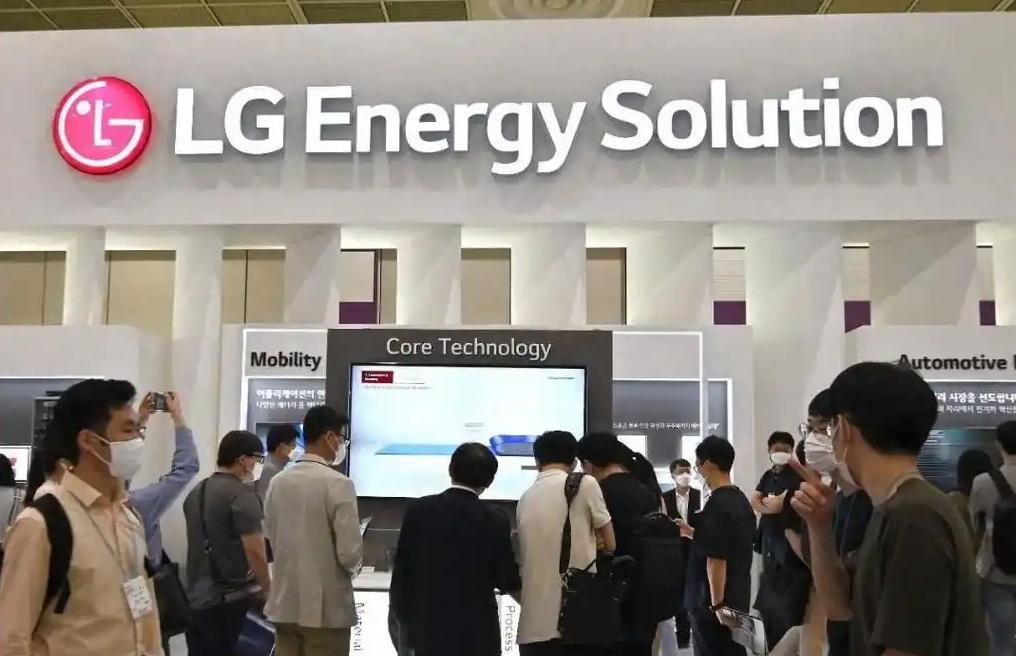
On Nov. 15, the company said it will display a next-generation energy storage system combining sodium-ion batteries and solid-state transformers (SSTs) at RE+ 2026, scheduled for Nov. 17-19 in the United States. The concept is aimed at AI data centers that require frequent charging and discharging and face rapid load fluctuations, combining sodium-ion’s high-power performance with SST power conversion capabilities.
The announcement is another important signal from LG Energy Solution on the application side, following its disclosure of a sodium-ion industrialization timetable. On Nov. 3, during its third-quarter earnings call, the company further clarified that it plans to produce sodium-ion battery samples for ESS use at its Ochang plant in Korea within 2026 and deliver test products to North American customers in 2027 to advance customer proof-of-concept (PoC) work.
As a result, LG Energy Solution’s sodium-ion business is taking two parallel paths: one focused on cell production and customer validation, and the other on developing next-generation power systems for AI data centers.
Why sodium-ion and SST are both entering AIDC
At RE+ 2026, LG Energy Solution will present a comprehensive AI data center power solution covering BESS, UPS, BBU and EMS. The sodium-ion battery and SST combination will be shown separately in the next-generation battery technology exhibition zone.
SST is a power conversion device built around power semiconductors. It can perform voltage regulation and AC/DC conversion, and can respond quickly to load changes through power electronic control. Compared with conventional transformers, its potential advantages include reducing power conversion stages, improving system controllability and enhancing dynamic response.
Chang Beom Kang, head of LG Energy Solution’s ESS battery business, explained in a Nov. 13 interview that the company combined SST with sodium-ion batteries because both technologies are highly compatible with the power infrastructure needs of next-generation AI data centers. SST can improve power conversion efficiency, simplify system architecture and respond quickly to power fluctuations, while sodium-ion batteries offer high-power performance, low-temperature output capability and cost competitiveness. LG believes the combination could help meet AI data centers’ requirements for both fast power response and system efficiency.
The proposal reflects changes in AI data center electricity demand. As GPU power density continues to rise, power loads on AI servers can change rapidly during training and inference. Data center battery systems are expected not only to respond to sudden power outages but also to participate in power smoothing, voltage support and operational assurance during grid disturbances.
Data center power supply architectures are also adjusting to this demand. In 2026, Google, Microsoft and Nvidia are advancing standardization of 800V DC power supply through the Open Compute Project (OCP), and have issued SST technical specifications for medium-voltage to 800V DC conversion. The related architecture aims to provide power supply capability for higher-power-density AI racks by centralizing power conversion and reducing distribution losses.
LG Energy Solution has already entered this technology ecosystem. In June this year, Nvidia disclosed in an announcement on cooperation with LG Group that LG Energy Solution plans to participate in the development of 800V DC data center energy storage solutions for next-generation GPUs. However, LG has not confirmed whether the sodium-ion and SST concept system shown at the event will adopt an 800V architecture, nor has it disclosed how storage batteries would be connected in that architecture.
Sodium-ion samples in 2026, North American customer testing in 2027
Alongside the concept system, LG Energy Solution is also advancing industrialization of its sodium-ion batteries. In March 2025, LG unveiled its sodium-ion battery development roadmap at the InterBattery exhibition, listing automotive 12V and 24V auxiliary power, UPS and ESS as key application directions for first-generation products, with a commercialization target of 2027. The company later plans to further improve energy density and expand into the economical EV market, with a longer-term volumetric energy density target of about 450 Wh/L.
In terms of technology, LG’s public research materials emphasize sodium-ion’s high-rate performance, low-temperature output and cost advantages, and propose using hard carbon anodes, leveraging existing lithium-ion production equipment and further introducing dry electrode processes.
New progress has also emerged in capacity construction. According to a July report by Korean battery industry media The Elec, LG Energy Solution retrofitted an existing production line at its first Nanjing plant in China in April to build a 200 MWh annual-capacity sodium-ion battery pilot line. It also plans to build a mother line at its Ochang plant in Korea for development and validation of sodium-ion mass-production processes. The report said LG plans to adopt its independently developed Advanced Z-Stacking process in sodium-ion products, combining stacking and lamination technologies to improve cell space utilization and manufacturability.
LG’s remarks during the Nov. 3 third-quarter earnings call further clarified its industrialization pace. Chief Financial Officer Lee Chang-sil said one of the products the Ochang mother factory is currently focusing on accelerating preparation for is sodium-ion batteries. ESS sample production will begin within the year, and test products will be sent to North American customers in 2027. The third-quarter official investor materials also listed the project as a new “SIB ESS Pilot” for 2026 and explicitly proposed PoC work with key ESS customers.
This means LG’s sodium-ion products already have clear customer validation targets, but customer identities, test scale, certification progress and subsequent procurement plans remain undisclosed. From the application roadmap announced in 2025 to production line and sample preparation in 2026 and North American customer testing in 2027, LG’s sodium-ion development has entered a more concrete engineering and commercial validation phase.
From cells to power systems, LG competes for AIDC orders
The launch of the sodium-ion and SST proposal is also linked to LG Energy Solution’s expanding AI data center business. LG has formed a multi-level product portfolio ranging from rack-level BBU and room-level UPS to behind-the-meter or grid-side BESS.
At RE+ 2026, the company will also display 2170 cylindrical-cell BBU, the JP6 UPS rack system and the JF3 AC LINK storage system using LFP batteries produced in the United States. JF3 AC LINK improves equipment layout density, increasing storage capacity per unit site area by about 26% compared with existing products, and introduces digital twin cooling control and power stabilization technologies.
Compared with the sodium-ion proposal, which remains at the concept stage, LG’s existing LFP storage business has already obtained actual customer projects and technical qualifications. In September this year, LG Energy Solution’s JF2 AC Link system entered Nvidia’s DSX Ready BESS qualified product list, making it one of the first three related storage suppliers. The solution involves functions such as AI load smoothing, voltage ride-through and grid support. On Nov. 3, LG further disclosed that it had secured a direct supply project for a behind-the-meter energy storage system from a large technology customer and is seeking more AI data center orders. These commercial advances are currently based mainly on LFP batteries and existing system integration capabilities and cannot be directly regarded as sodium-ion orders.
On the manufacturing side, LG expects North American ESS capacity to exceed 50 GWh by the end of 2026 and further expand to more than 70 GWh by the end of 2027, while relying on its Vertech subsidiary to provide storage system design, construction, operation and optimization services. Capacity expansion, customer channels and system integration capabilities provide a business foundation for future introduction of sodium-ion products, but the North American capacity plans are not equivalent to sodium-ion capacity.
Meanwhile, Samsung SDI also concentrated on displaying AIDC battery products at RE+ 2026, including the SBB 2.0 LFP prismatic battery system for grid storage, the U8A3 UPS battery using lithium manganese oxide (LMO) technology and high-power cylindrical batteries for BBU. Both Korean battery companies are competing for the AI data center power infrastructure market, but their technology priorities differ. Samsung SDI focused more on the output capability and safety of existing lithium-ion products, while LG Energy Solution, in addition to its existing LFP, UPS and BBU businesses, further displayed the combination of sodium-ion batteries and new power conversion equipment.
For the sodium-ion industry, LG’s move provides a new commercial observation window: sodium-ion is beginning to be included by leading international battery manufacturers as a technology option for next-generation AI data center power systems. The next stage will require validation of sodium-ion’s actual performance and cost advantages in high-frequency power regulation scenarios, as well as whether it can form a competitive commercial solution with SST, PCS and energy management systems. The North American customer testing in 2027 will be an important milestone for LG Energy Solution’s sodium-ion business as it moves from technology demonstration toward actual project application.
Next:Volkswagen Certifies CALB Battery Test Lab
Previous:HiTHIUM to Supply BESS for Romania Hybrid Plant
Contact Person: Miss. Elsa Liu
| WhatsApp : | +8617763274209 |
|---|---|
| Skype : | +8617763274209 |
| WeChat : | 17763274209 |
| Email : | Elsa@lifepo4-battery.com |
