

Commercial battery energy storage systems (BESS) help factories, warehouses, office buildings, retail facilities, and other commercial sites manage when and how they use electricity. Instead of consuming electricity only when it is generated or purchased from the grid, a business can store electrical energy in rechargeable batteries and use it later.
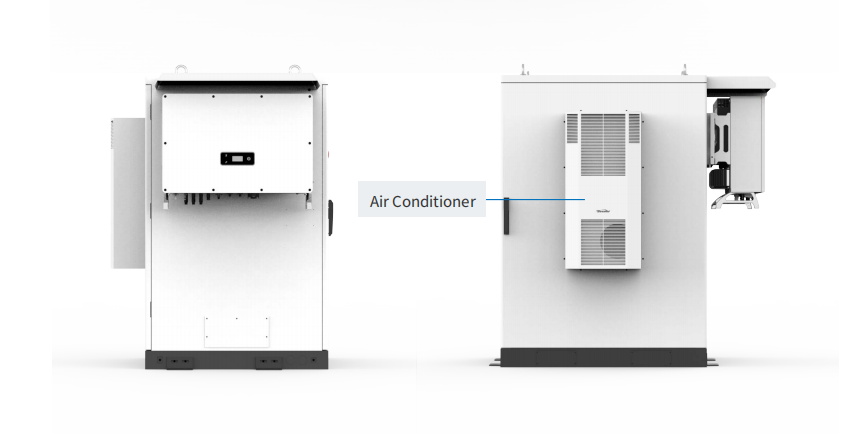
A typical commercial BESS combines several key components, including battery modules, a battery management system (BMS), a power conversion system (PCS), an energy management system (EMS), thermal management equipment, protection devices, meters, and communication controls.
The battery stores energy electrochemically, while the PCS converts electricity between AC and DC. The BMS monitors battery conditions and protects the cells, while the EMS determines when the system should charge or discharge.
The real value of commercial battery storage comes from intelligent control. A properly designed system can reduce peak demand, increase solar self-consumption, shift electricity consumption to lower-cost periods, provide backup power, and potentially participate in grid services.
A commercial battery energy storage system stores electrical energy for later use at a commercial or industrial facility.
The basic process is straightforward:
Electricity → PCS → Battery → PCS → Electrical Loads
During charging, the system converts incoming electrical power into a form that the battery can store. During discharge, the stored energy moves back through the PCS and becomes usable AC electricity for the facility.
However, a commercial BESS is more than a large battery. Its software, protection systems, metering, thermal management, and power electronics determine how safely and effectively the battery operates.
The system may respond to:
Electricity prices
Facility load demand
Solar generation
Peak-demand periods
Battery state of charge
Backup-power requirements
Grid-service commands
Equipment operating limits
This coordination allows one battery system to support multiple energy-management objectives.
In a common AC-coupled battery storage system, the battery connects to the facility's AC electrical network through a bidirectional PCS.
When charging, the PCS converts AC electricity into DC electricity suitable for the battery. The battery then stores the energy electrochemically.
When discharging, the process reverses. The battery provides DC power to the PCS, which converts it into controlled AC power for the facility.
A commercial battery does not create electricity. Energy is inevitably lost through power conversion, battery resistance, thermal management, auxiliary equipment, and other system components.
For this reason, businesses should distinguish between battery-level efficiency and overall system or site-level efficiency when evaluating BESS performance.
The EMS continuously evaluates operating conditions and determines whether the battery should charge.
For example, the system may charge when:
Electricity prices are relatively low.
Solar generation exceeds current facility demand.
The site expects a future demand peak.
The battery needs to maintain a backup reserve.
Grid conditions create an economic charging opportunity.
The EMS must consider the entire facility rather than operating the battery independently. Charging a battery at maximum power while the factory is already operating near its grid-import limit could unintentionally create another demand peak.
Battery cells are connected into modules, racks, and larger battery units to achieve the required voltage and energy capacity.
The stored energy remains available within the battery's permitted operating range until the system receives a discharge command or a protection condition limits operation.
Two important battery parameters are state of charge (SOC) and state of health (SOH).
SOC estimates how much usable charge remains in the battery. It does not necessarily represent the exact amount of AC energy that a facility can receive. Conversion losses, minimum SOC limits, battery temperature, discharge power, and system conditions all affect usable energy.
SOH describes the battery's condition compared with a defined reference state. As cells age, available capacity and power performance can gradually change.
The battery management system (BMS) is one of the most important control layers in a commercial BESS.
It monitors parameters such as:
Cell voltage
Module voltage
Battery temperature
Charging and discharging current
SOC
SOH
Operating limits
The BMS can balance cells and communicate allowable charging or discharging limits to other system controllers.
If abnormal conditions occur, the BMS can reduce power or stop operation to protect the battery.
Thermal management also plays a critical role. Cooling systems remove heat generated during operation, while heating equipment may maintain suitable temperatures in cold environments. These auxiliary systems consume electricity and should therefore be included when evaluating the BESS's overall energy performance.
The power conversion system (PCS) controls the flow of electricity between the battery's DC side and the facility's AC network.
During discharge, the PCS converts battery DC power into AC power that the facility can use.
For example, suppose a factory consumes 420 kW and the battery supplies 120 kW. Ignoring other generation and system losses, the grid would need to provide approximately 300 kW.
This simple example demonstrates how battery storage can reduce grid import during high-demand periods.
However, the battery must have sufficient usable energy, and the PCS must have enough output power to support the required load.
The EMS acts as the system's energy-management layer.
Depending on the project, it can use information from:
Facility meters
Solar inverters
Electricity tariffs
Load forecasts
Battery SOC
Weather or solar forecasts
Grid signals
Backup-power requirements
The EMS then determines when to charge, discharge, or remain idle.
Effective dispatch requires prioritization. A battery reserved for emergency backup cannot simultaneously use all of its energy for daily energy arbitrage. Likewise, charging too early may leave insufficient capacity to absorb midday solar production.
The best strategy balances economic benefits, operational requirements, battery degradation, and reserve capacity.
| Operating Mode | How the Battery Works | Key Requirement |
|---|---|---|
| Peak Shaving | Discharges during high-demand periods to reduce grid import. | Sufficient power and usable energy during the peak interval. |
| Energy Arbitrage | Charges during lower-cost periods and discharges when electricity costs more. | A sufficient price difference after accounting for losses and operating costs. |
| Solar Self-Consumption | Stores excess solar generation and supplies facility loads later. | Sufficient PV surplus, battery capacity, and compatible controls. |
| Backup Power | Supplies designated critical loads when the utility grid fails. | Islanding, transfer equipment, protection, and suitable controls. |
| Grid Services | Responds to permitted grid-support or flexibility signals. | Appropriate equipment, metering, controls, and market or utility approval. |
A single commercial BESS can support several of these applications, but the available battery power and energy must be allocated carefully.
Commercial battery storage and solar photovoltaic systems can work together in either AC-coupled or DC-coupled configurations.
In an AC-coupled system, the solar installation and battery system typically use separate power-conversion equipment and connect through the facility's AC network. This configuration can be attractive when adding battery storage to an existing solar installation.
In a DC-coupled system, solar generation and battery storage share an appropriate DC-side architecture before power reaches the AC inverter. Because solar panels naturally generate DC electricity, this arrangement can reduce unnecessary conversion steps in certain system designs.
The correct architecture depends on the project's electrical design, existing equipment, energy-flow requirements, export limits, and control strategy.
The system also needs accurate solar-generation data, battery charge limits, PV curtailment controls, and reliable communication between components.
A grid-connected BESS does not automatically provide backup power during an outage.
A system designed for backup operation must safely disconnect the protected electrical system from the utility grid and establish an appropriate local power supply. Depending on the project, this may require:
Grid-forming PCS technology
Automatic transfer equipment
Microgrid controllers
Critical-load distribution panels
Protection equipment
Synchronization controls
The system designer must also consider the characteristics of the loads being powered.
Large motors, compressors, pumps, and other equipment can require substantial starting current. The BESS must therefore provide adequate instantaneous power and overload capability, not just enough energy capacity.
Some sensitive equipment cannot tolerate even a short interruption. In these applications, a separate UPS may be necessary to maintain continuous power during the transition.
When utility power returns, the system must follow the correct synchronization and protection sequence before reconnecting to the grid.
Consider a factory with solar generation and time-of-use electricity pricing.
| Period or Condition | Possible Battery Operation |
|---|---|
| Lower-price hours | Charge within the site's grid-import limit while preserving capacity for expected solar production. |
| Midday solar surplus | Supply factory loads with solar power first and store suitable excess generation in the battery. |
| Production peak | Discharge the battery to reduce grid import during the relevant demand interval. |
| Higher-price hours | Use stored energy to reduce expensive electricity purchases while maintaining the required backup reserve. |
| Grid outage | Supply designated critical loads if the BESS has been engineered for island operation. |
This schedule is only an example. Actual battery dispatch depends on local electricity tariffs, facility load profiles, solar production, battery specifications, weather, grid requirements, and the site's operating strategy.
Battery capacity alone does not determine the value of a commercial energy storage system.
A 1 MWh battery, for example, may serve very different purposes depending on whether the project prioritizes peak shaving, solar self-consumption, energy arbitrage, backup power, or grid services.
The system must answer several practical questions:
When should the battery charge?
When should it discharge?
How much energy should remain in reserve?
How much power can the PCS deliver?
What operating conditions should trigger protection?
How should competing energy-management objectives be prioritized?
A well-designed EMS coordinates these decisions while the BMS protects the battery and the PCS manages electrical power conversion.
Commercial battery energy storage systems combine electrochemical storage, power electronics, battery controls, thermal management, metering, communications, and energy-management software.
The battery provides the energy-storage capability, but the BMS, PCS, and EMS work together to turn that stored energy into a useful commercial energy resource.
For businesses, the most important consideration is not simply how many kilowatt-hours a battery can store. The system must deliver the right amount of power at the right time, while maintaining safety, efficiency, battery life, and operational flexibility.
When properly engineered, a commercial BESS can become an important part of a facility's energy strategy—helping reduce peak demand, increase solar utilization, manage electricity costs, and provide resilience when grid conditions change.
Contact Person: Miss. Elsa Liu
| WhatsApp : | +8617763274209 |
|---|---|
| Skype : | +8617763274209 |
| WeChat : | 17763274209 |
| Email : | Elsa@lifepo4-battery.com |
