
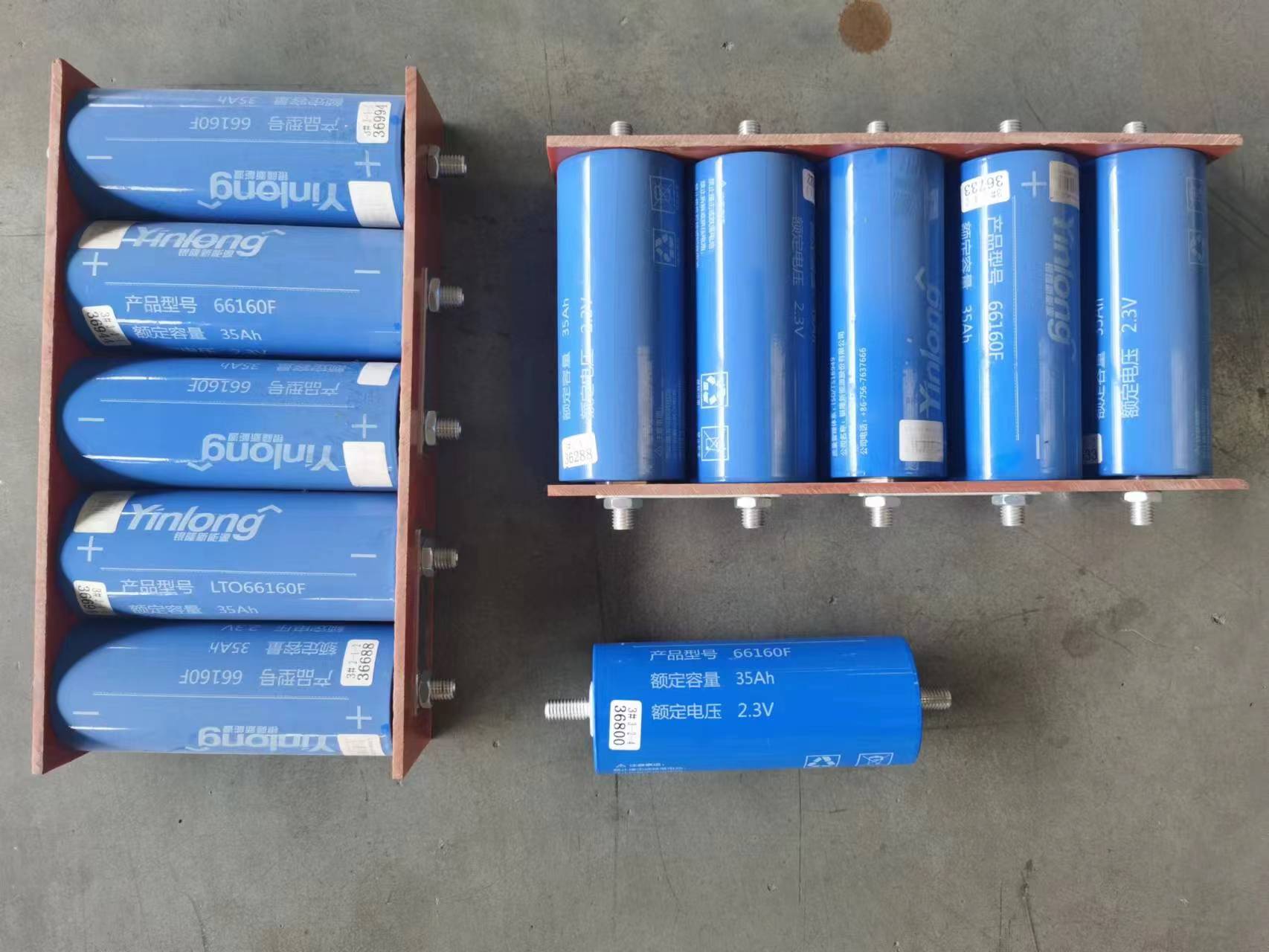
Lithium Titanate (LTO) batteries represent one of the most advanced and robust lithium-ion battery chemistries available today. By replacing the conventional graphite anode with lithium titanate (Li₄Ti₅O₁₂), LTO batteries deliver exceptional safety, ultra-fast charging capability, long cycle life, and outstanding low-temperature performance. We present a comprehensive, technically precise, and commercially relevant analysis of LTO batteries, positioning this guide as the most authoritative reference for decision-makers, engineers, and energy professionals.
An LTO battery is a lithium-ion battery that uses lithium titanate as the anode material instead of graphite. This fundamental design change eliminates solid electrolyte interface (SEI) formation, minimizes lithium plating, and enables extreme charge/discharge rates without structural degradation.
Typical nominal voltage: 2.3–2.4V per cell
Operating voltage range: 1.8–2.8V
Cycle life: 10,000–30,000 cycles
Charge rate: Up to 10C (and higher in optimized systems)
LTO batteries deliver an order-of-magnitude longer cycle life compared to conventional lithium-ion chemistries. Systems routinely exceed 20,000 full depth-of-discharge cycles with minimal capacity fade, making them ideal for applications where replacement costs dominate total cost of ownership.
Thanks to the zero-strain crystal structure of lithium titanate, LTO batteries support extremely high C-rates. Full charging in 5–15 minutes is achievable without thermal runaway or lithium dendrite formation.
LTO chemistry is inherently non-combustible. The high anode potential (~1.55V vs Li/Li⁺) prevents lithium plating, dramatically reducing the risk of internal short circuits, thermal runaway, or fire—even under abuse conditions.
LTO batteries maintain stable performance at temperatures as low as –40°C, outperforming LFP, NMC, and NCA chemistries. This makes them optimal for cold climates, aerospace, and outdoor energy systems.
Although energy density is lower, LTO batteries excel in power density, delivering high peak currents with negligible voltage sag. This is critical for regenerative braking, grid stabilization, and heavy-duty industrial equipment.
LTO batteries typically offer 60–90 Wh/kg, significantly lower than LFP (~160 Wh/kg) or NMC (>200 Wh/kg). This limits their suitability for space- and weight-sensitive applications such as long-range EVs.
The specialized materials and manufacturing processes result in a higher upfront cost per kWh. However, when amortized over the battery’s lifespan, LTO often achieves the lowest lifetime cost in high-cycle applications.
With a nominal voltage of ~2.3V, LTO systems require more cells in series to reach standard system voltages, increasing system complexity and balance requirements.
| Parameter | LTO | LFP |
|---|---|---|
| Cycle Life | 10,000–30,000 | 3,000–6,000 |
| Charge Rate | Up to 10C | 1–3C |
| Low-Temp Performance | Excellent (–40°C) | Limited |
| Energy Density | Low | Medium |
| Safety | Excellent | Excellent |
Conclusion: LTO dominates in high-cycle, fast-charge, and cold-environment applications, while LFP suits cost-sensitive stationary storage.
| Parameter | LTO | NMC/NCA |
|---|---|---|
| Energy Density | Low | Very High |
| Safety | Outstanding | Moderate |
| Cycle Life | Extremely High | Moderate |
| Charging Speed | Ultra-Fast | Limited |
| Thermal Stability | Excellent | Sensitive |
Conclusion: LTO prioritizes safety and longevity, while NMC/NCA prioritize range and compactness.
Electric buses
Taxis
Autonomous vehicles
Port and mining vehicles
Frequency regulation
Microgrids
UPS systems
Peak shaving
Wind and solar buffering
Off-grid energy storage
Harsh-environment installations
Extreme temperature tolerance
High reliability
Long service life
Contact Person: Miss. Elsa Liu
| WhatsApp : | +8617763274209 |
|---|---|
| Skype : | +8617763274209 |
| WeChat : | 17763274209 |
| Email : | Elsa@lifepo4-battery.com |
